






Basics of Riding Technique in a BIKE Park: Braking, Corners, Body Position
A BIKE park is not just about speed. Real flow comes the moment a rider masters proper riding technique, learns how to read the terrain, and feels natural on the bike. That’s exactly why riding technique is one of the most important things every rider should focus on — from complete beginners to more experienced bikers.
If you want to feel more confident on the trails, have better control, and most importantly enjoy the ride more, these basic riding principles are something you should definitely master.
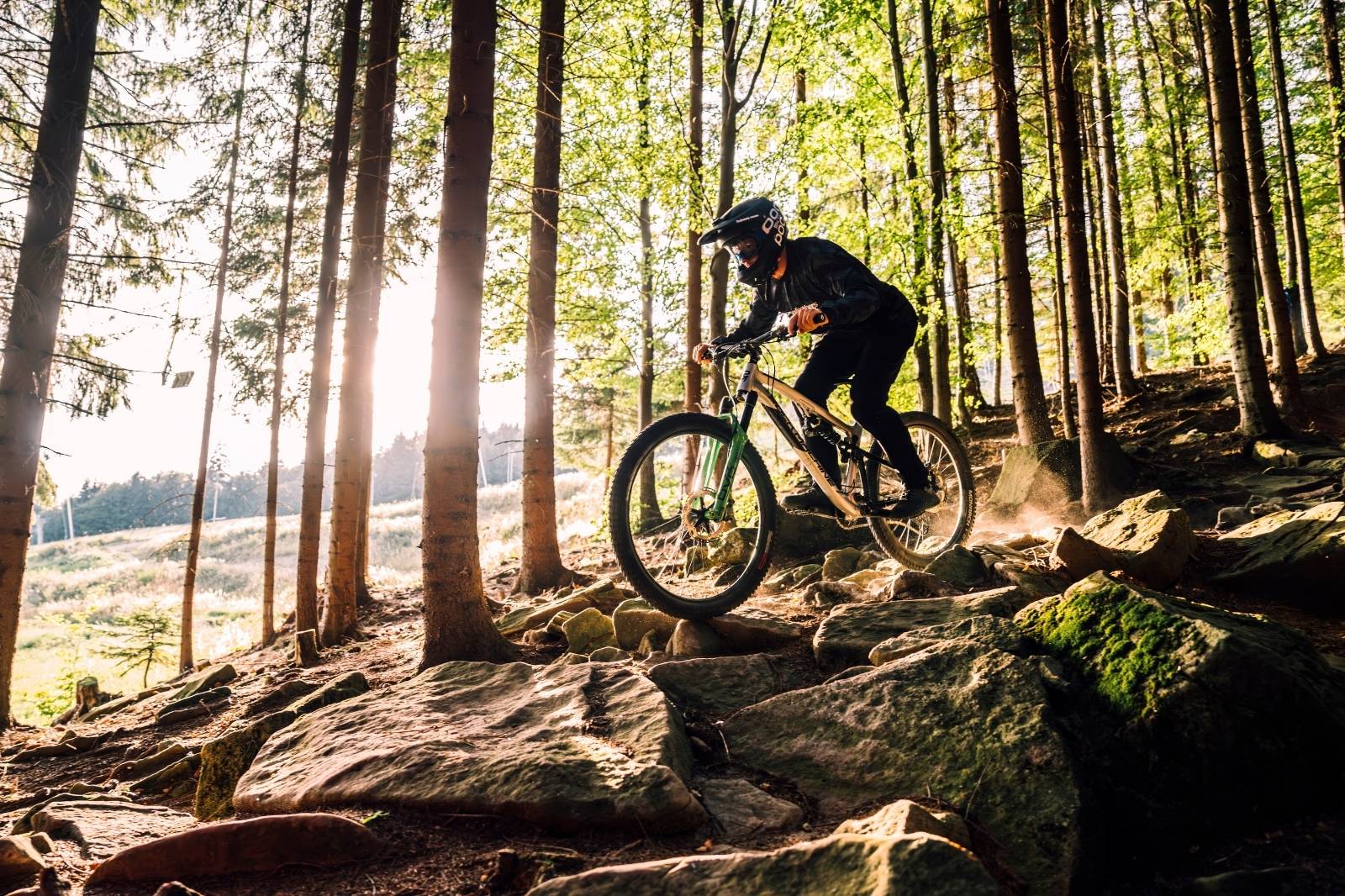
Why Riding Technique Shapes Your BIKE Park Experience
Many bikers think progress comes automatically with more rides. In reality, the biggest difference comes from technique.
Proper body position, braking control, and cornering skills can:
- improve bike control,
- reduce fatigue during riding,
- help you handle more challenging terrain,
- and most importantly significantly increase safety.
Often, it’s not about courage — it’s about good habits.
For beginners, one of the biggest advantages is riding in an environment where they can gradually improve on different types of trails. That’s why modern BIKE parks are perfect places to learn and develop riding skills.
👉🏼 Explore the trails of BIKE Park Kubínska.
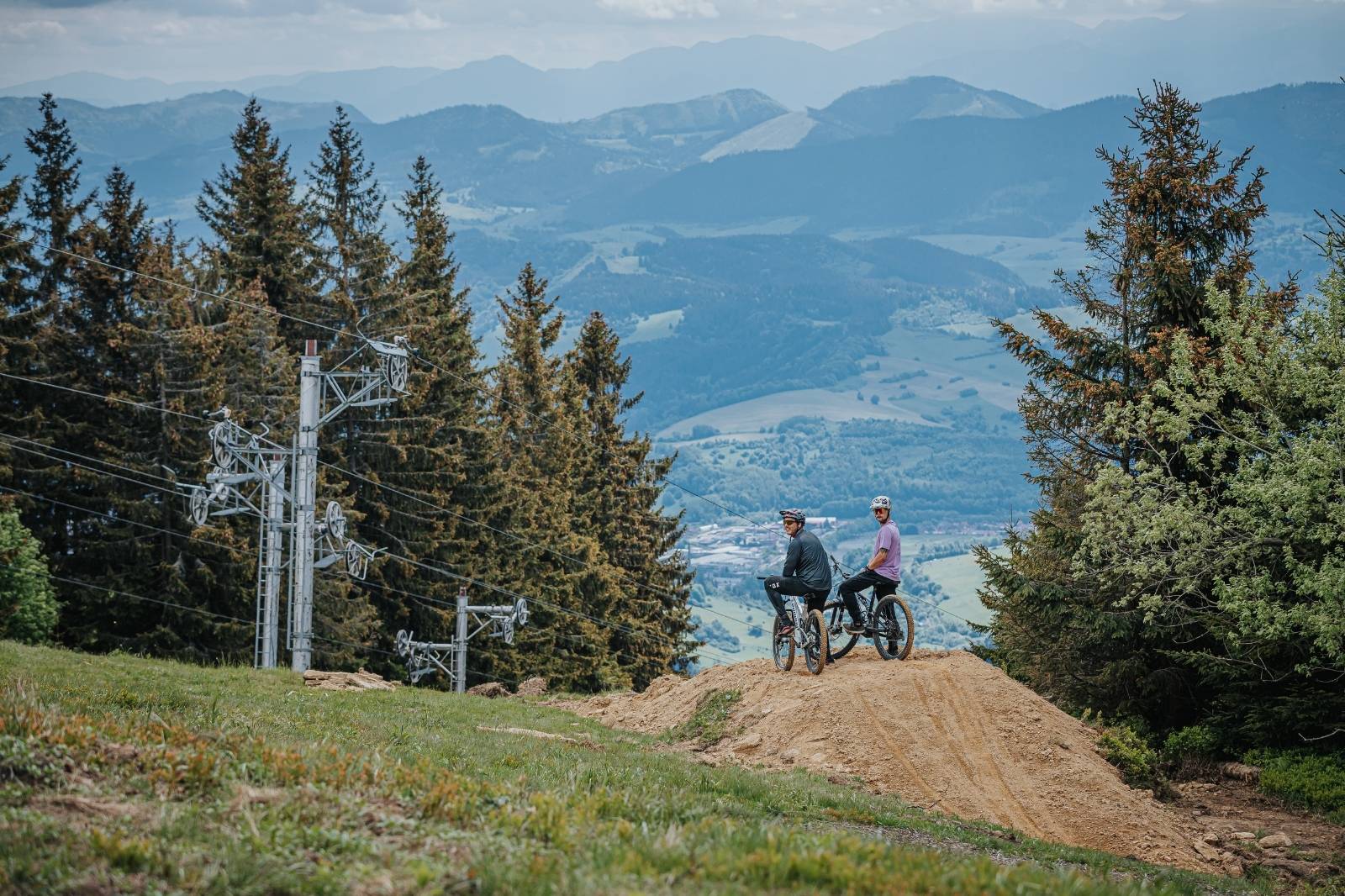
How to Brake Properly on a Mountain Bike?
Braking is one of the absolute fundamentals of MTB riding, but at the same time, it’s also one of the most common mistakes riders make.
Many bikers brake:
- too late,
- too aggressively,
- or constantly throughout the ride.
The result is loss of control, skidding, or unnecessarily tired hands.
Brake Before the Obstacle
A bike is most stable when rolling over obstacles without harsh braking. That’s why it’s best to:
- slow down before entering a corner or technical section,
- and keep the actual section as smooth as possible.
The Front Brake Is Not the Enemy
Many beginners are afraid of using the front brake, even though it provides most of the stopping power. The key is learning how to apply it smoothly and avoid locking the wheel.
Most Common Braking Mistakes
- locked rear wheel,
- braking directly in corners,
- overly stiff arms,
- panic braking at the last second.
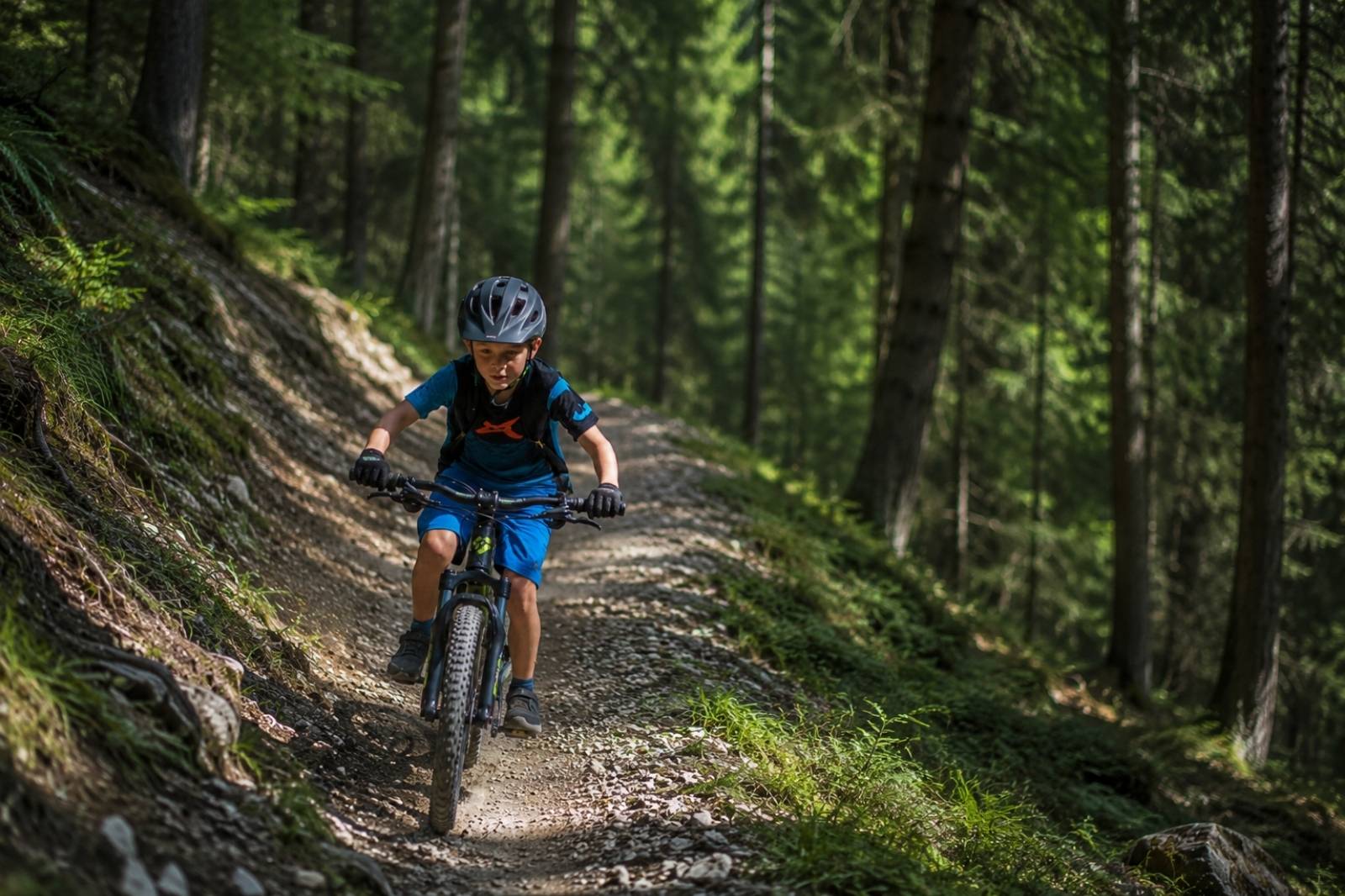
How to Ride Corners in a BIKE Park?
Corners often determine whether your ride feels smooth and controlled or nervous and chaotic.
Good cornering technique is not about aggression — it’s about proper body movement and vision.
Where Should You Look?
Your bike naturally follows where your eyes are focused. If you constantly stare right in front of your front wheel, your reactions become delayed and your riding feels unstable.
Try to:
- look further ahead,
- focus on the exit of the corner,
- and read the terrain in advance.
Use Your Body, Not Just the Handlebars
In berms and corners, it’s important to:
- keep your arms and legs bent,
- push the bike underneath you,
- and maintain a stable center of gravity.
The more relaxed you are, the more naturally the bike will respond.
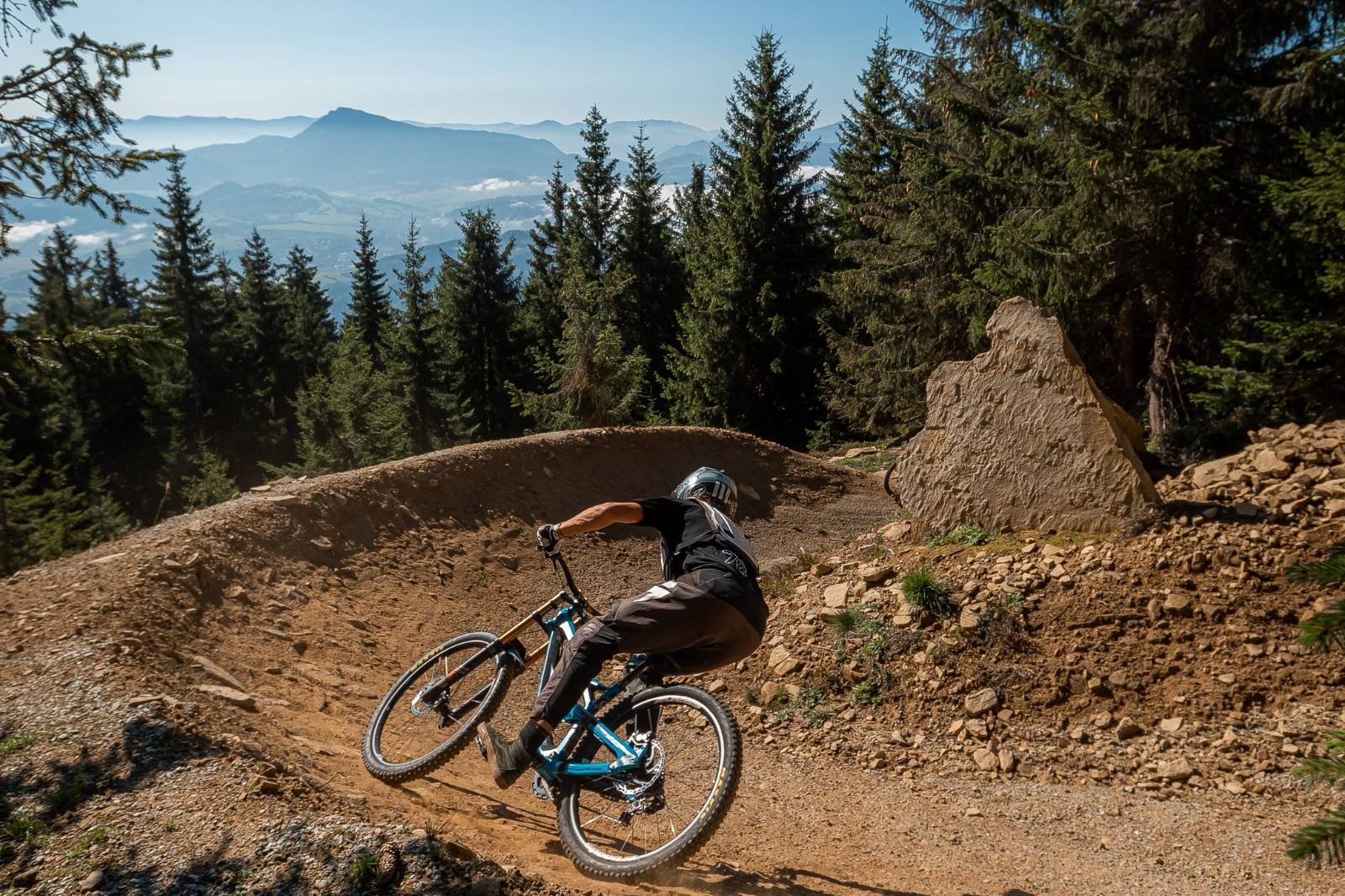
What Is the Correct Riding Position?
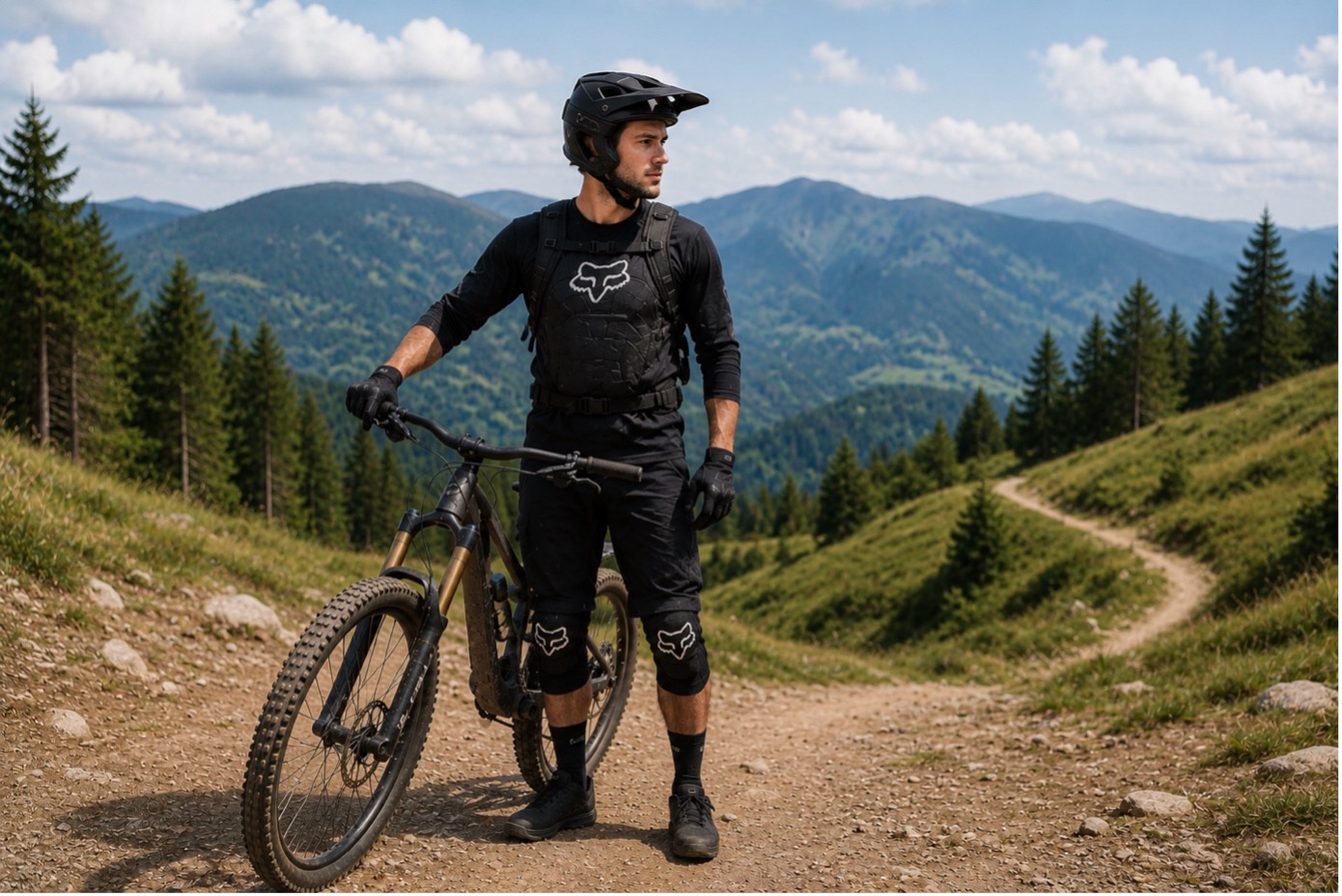
Proper body position is the absolute foundation of every ride in a BIKE park.
If a rider stands too stiffly or sits in the wrong position, the bike loses stability and riding becomes much more difficult.
Active Riding Position
The ideal riding position looks roughly like this:
- slightly bent knees,
- elbows out,
- heels slightly down,
- eyes looking forward,
- relaxed body ready to react.
A BIKE park is not an asphalt road. The bike constantly moves underneath the rider, and your body has to move naturally with the terrain.
Why Keep Your Arms and Legs Bent?
Your arms and legs work as natural suspension. If they are stiff and fully extended:
- impacts transfer directly into your body,
- the bike loses grip,
- and the rider gets tired much faster.
Most Common Beginner Mistakes in a BIKE Park
Starting out in a BIKE park is often connected with unnecessary stress or trying to ride too fast too soon.
The most common mistakes:
- looking directly in front of the bike,
- braking in every section,
- stiff body posture,
- riding above your skill level,
- underestimating protective gear,
- incorrect tire pressure.
Real progress doesn’t come from taking risks — it comes from gradually building confidence.
Don’t Underestimate Safety in a BIKE Park
Even though a BIKE park is all about adrenaline and fun, safety should always come first.
Essential gear should include:
- a quality helmet,
- gloves,
- knee pads,
- and on more demanding trails also a full-face helmet and back protection.
Before every ride, it’s worth checking:
- your bike,
- tire pressure,
- brakes,
- and suspension setup.
If you don’t have your own bike or gear yet, or if you want to try a suitable model for the BIKE park, the Najšport bike shop and rental service will gladly help you choose the right equipment.
Why Is Kubínska the Ideal Place to Practice Riding Technique?
BIKE Park Kubínska offers a combination of flow trails, technical sections, and gradual progression opportunities for less experienced riders.
Some of the biggest advantages include:
- diverse trail options,
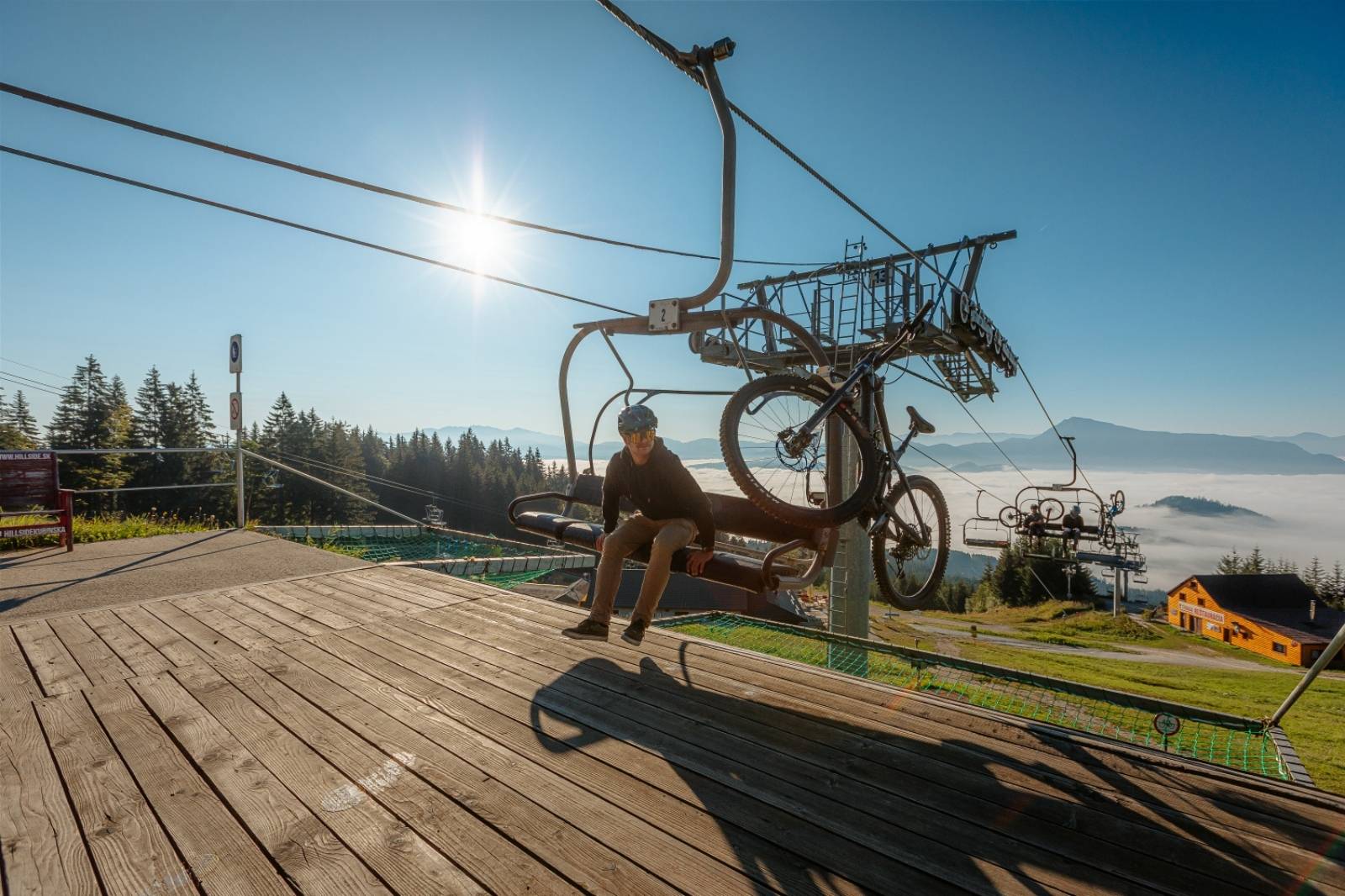
- comfortable lift access,
- natural mountain terrain,
- and a modern riding experience.
Whether you want to practice cornering, braking, or simply gain more confidence on the bike, Kubínska is a perfect place for your first — and next — MTB kilometers.
👉🏼 Check the BIKE park ticket prices and current information about the summer season at Kubínska.
Start Slowly and Enjoy the Ride
Every experienced rider started somewhere. Riding technique won’t improve overnight, but mastering the basics can make a huge difference.
The most important thing is to:
- ride regularly,
- avoid skipping progression levels,
- and gradually build confidence on the bike.
A BIKE park should mainly be about enjoying the ride, progression, and unforgettable trail experiences.
Zdieľajte tento blog


- Kubínska
- 22. May 2026
Dalšie články
The most beautiful lookout towers in Slovakia with the best views
- Kubínska
- 8. June 2026
- 8 minutes reading
Bike Park Etiquette: What Every Rider Should Know
- Kubínska
- 16. June 2026
- 6 minutes reading
10 Tips for Baby-Friendly Trail for Families with Children
- Kubínska
- 19. August 2025
- 20 minutes reading
Together we make stories.
Together we are #kubinska




 © 2026 ORAVA SKIPARK, a.s.