





How to Choose a Bike for Child: A Practical Guide for Parents
Choosing the right children’s bike is not only a matter of comfort. It affects how safe your child feels, how quickly they learn to control the bike and, most importantly, whether they develop a genuine love of cycling.
When choosing a bike, it is therefore not enough to look only at the recommended age stated for a particular model. Your child’s height, leg length, riding experience and ability to control the bike comfortably are far more important. A bike that is too large or too heavy can cause insecurity, fatigue and fear of falling. A properly fitting bike, on the other hand, builds confidence and turns family rides into an experience your child will want to enjoy again and again.
Why Is the Right Bike Size More Important Than Your Child’s Age?
Two children of the same age can have completely different heights, body proportions and levels of physical ability. Age should therefore be treated only as a general guide, not as the main selection criterion.
Children’s bikes are most commonly categorised by wheel diameter, for example 12-inch, 16-inch, 20-inch or 24-inch bikes. However, even two bikes with the same wheel size may fit your child differently. They may vary in frame height, minimum saddle height and the distance between the saddle and the handlebars.
With the correct bike size, your child:
- can comfortably reach the handlebars and brakes,
- can stop and get off the bike safely,
- does not have to ride with unnaturally outstretched arms,
- can control the bike without excessive effort,
- feels stable even when riding slowly.
A well-fitting bike is easier to control and helps your child gain confidence from the very first rides. Manufacturers of children’s bikes therefore recommend considering your child’s height, inside leg measurement and actual riding ability above all else.

How to Measure Your Child Before Choosing a Bike
Before visiting a shop, measure your child’s overall height and inside leg length. The inside leg measurement will help determine whether your child can safely reach the ground and stand comfortably over the frame.
A Simple Way to Measure the Inside Leg
Ask your child to stand barefoot with their back against a wall. Place a firm book between their legs so that its top edge gently touches the crotch. Then measure the distance from the floor to the top edge of the book.
Compare the measurement with the size chart provided by the manufacturer of the selected bike. General size charts can help narrow down the options, but different brands use different frame geometries. A test ride should therefore always be part of the final decision.
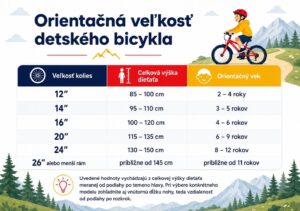
Approximate Children’s Bike Size
The following table is intended as a basic guide. The exact size ranges may vary between individual models.
If your child falls between two sizes, do not automatically choose the larger model. Let them try both and select the bike they can control more confidently.
Why You Should Not Buy a Bike “to Grow Into”
Buying a larger bike in the hope that your child will gradually grow into it is one of the most common mistakes parents make. With clothing, a larger size may simply mean less comfort. With a bike, however, it directly affects safety.
On a bike that is too large, your child may struggle to reach the ground comfortably, ride with overly extended arms and find it more difficult to control the handlebars. Problems are most likely to arise when starting, braking suddenly or losing balance.
A better choice is a bike that fits your child today. You can sell it later, pass it on to a younger sibling or use a rental service if your child is growing quickly.
How Can You Tell Whether the Bike Really Fits Your Child?
The most reliable test is a short ride. Your child should not simply ride across a flat surface. Ask them to start independently, stop, turn around and complete several slow turns.
Pay particular attention to the following signs:
- there is enough clearance when your child stands over the frame,
- they can reach the handlebars without leaning too far forward,
- their elbows remain slightly relaxed,
- they can comfortably reach the brake levers,
- they can lift, push and turn the bike independently,
- they can place a foot safely on the ground when stopping.
Slightly bent arms help absorb bumps and maintain control over the direction of travel. If your child is stretched too far forward, they will tire more quickly and may react more slowly when faced with an unexpected obstacle.
The weight of the bike is also important. You do not need to compare every gram, but your child should not struggle simply to lift the bike off the ground or push it up a gentle slope.
When Is It Better to Rent a Bike Instead of Buying One?
Buying a bike makes sense if your child cycles regularly and will use it throughout the season. Renting may be more practical if you only cycle during holidays, your child is currently between two sizes or you want to find out which bike suits them best before making a purchase.
A rental service is also useful during family trips away from home. You do not have to arrange bike transport, and you can choose a model on site according to your child’s height, experience and the planned route.
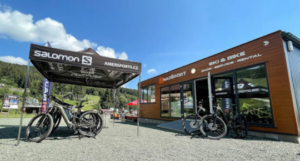
At Kubínska, you can use the Najšport bike rental service located directly at the resort. Your child can try several different types of bikes and compare which one feels the most comfortable and easiest to control. This makes it easier to determine which bike size and type truly suits them, while testing it during an actual ride in real conditions.
If you have a digital Tím Kubínska card, you will also receive a 10% discount on bike rental. If you decide to purchase a bike after trying it, you can also use a 10% discount on full-price products and a 5% discount on already discounted products.
Where to Go on a Bike Trip with Children
During your first family rides, the number of kilometres is not what matters most. Choose the route according to the fitness and experience of the least confident member of the family. For a child, a shorter circuit with breaks is often better than a long route where the final kilometres become something they simply have to endure.
An ideal family bike trip offers:
- a manageable gradient,
- a safe and easy-to-follow surface,
- opportunities for regular breaks,
- an interesting destination or viewpoint,
- the option to shorten the route if anyone becomes tired.
Remember that the journey back is often more demanding for a child than the first half of the trip. Do not wait until they are already tired before taking a break. Short stops for water, a snack or a scenic view help maintain a good mood and a comfortable pace.
Family Cycling at Kubínska
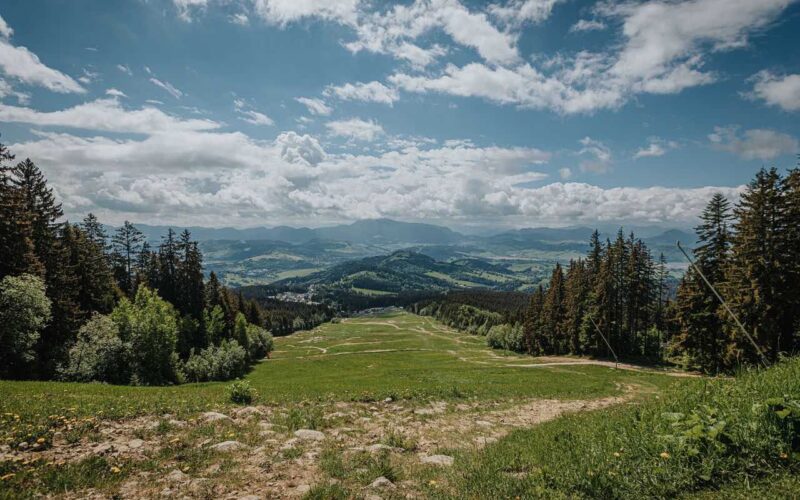
Kubínska offers marked cycling routes of various lengths and difficulty levels, making it possible to adapt your trip to the experience of the children and the whole family. The experience includes mountain sections, views of the Orava countryside and opportunities to relax directly at the resort.
When planning your trip, families can also benefit from the option of taking bikes up by cable car. This allows you to avoid the most demanding part of the climb and save more energy for riding together and exploring the surrounding area.
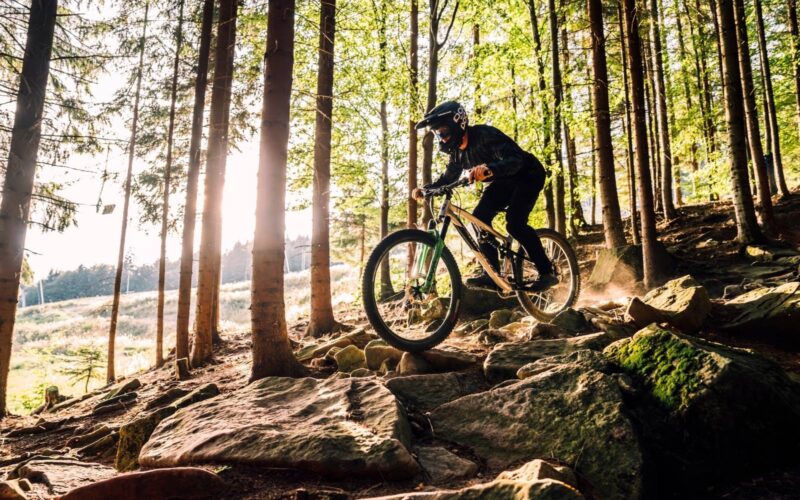
For families, we recommend choosing cycling routes that match the children’s level of experience. At Kubínska, an ideal option is the easy yellow cycling route, which is approximately 9 kilometres long and leads from Vrcholovka, past the lake, to the lower cable car station. More demanding mountain sections and the trails in the BIKE PARK are intended for more experienced riders who can safely handle braking, turns and off-road riding.

Choose a Bike Your Child Will Want to Ride
The best children’s bike is not the one your child may eventually grow into, nor the model with the greatest number of accessories. It is the bike that fits them now, that they can control safely and that feels natural to ride.
When choosing a bike, consider your child’s height, inside leg length and actual ability. Always let them try the bike and observe not only their riding position, but also how they start, brake and handle it. By choosing correctly, you are not only creating safer conditions for riding. You are also helping your child develop a positive relationship with movement, nature and shared family trips.
Zdieľajte tento blog


- Kubínska
- 4. August 2026
Dalšie články
How Orava Tastes: Where to Find Nature’s Treasures and Local Specialties
- Kubínska
- 14. August 2025
- 5 minutes reading

Cycling in Orava: The Most Beautiful Routes You Must Explore This Summer
- Kubínska
- 1. July 2026
- 5 minutes reading
Basics of Riding Technique in a BIKE Park: Braking, Corners, Body Position
- Kubínska
- 22. May 2026
- 5 minutes reading
Together we make stories.
Together we are #kubinska




 © 2026 ORAVA SKIPARK, a.s.