




What to wear for winter hiking: essential clothing and gear
At the start of your hike, you zip your jacket right up to your chin. After the first climb, you’re already wondering which layer to take off. Then you stop to admire the view and suddenly wish you had another one to put on. These situations are familiar to anyone who hikes in winter. That’s why it’s worth giving your clothing a little thought before you set off.
The good news is that you don’t need a wardrobe full of specialist clothing to enjoy a winter outing. What matters is knowing how to combine the right pieces and packing suitable gear for where you’re heading. So, how should you dress for winter hiking to stay comfortable both on the move and during breaks?

Check the weather and trail conditions before you set off
The weather may be calm at the start of your hike, but higher up you could encounter wind, fog or an icy trail. Before choosing what to wear, take a moment to look at your planned route.
Check the forecast for your destination and elevation, the latest conditions and warnings from the Slovak Mountain Rescue Service, and any trail closures. Allow extra time beyond the walking times shown on trail signs in winter — snow and ice can slow you down considerably. Set off early enough and plan to be back before dark.
If you’re planning an outing around Kubínska hoľa, take a look at the live webcams on Kubínska LIVE, too. They’ll give you an idea of the current weather, visibility and snow cover in different parts of the resort.
Why is layering a good idea?
Layering lets you adapt to changes in the weather and how hard you’re working throughout your hike. You can remove a layer on the climb, put on your jacket before an exposed, windy stretch and add insulation when you stop for a break.
The basic system consists of three layers: a moisture-wicking base layer, an insulating mid-layer and a protective outer layer. You don’t have to wear them all from the start. The key is knowing how to combine them as needed.
The base layer: keeping sweat from leaving you cold
Wear a moisture-wicking top next to your skin and, depending on the temperature, thermal leggings as well. Their job is to move moisture away from your skin so you’re not left in damp clothing after the climb.
Synthetic fabrics, merino wool or a blend of the two are all suitable options. Synthetics generally dry quickly and work well during more strenuous activity. Merino is also useful at a gentler pace and on longer outings, as it resists odours for longer.
Save your cotton T-shirt for changing into when you get back. Once sweaty, it takes a long time to dry and can leave you feeling uncomfortably cold during a break.
When choosing base layers, consider the fabric, thickness and fit. You won’t necessarily need the warmest thermal underwear for a brisk uphill hike. It should sit comfortably against your skin without feeling restrictive.
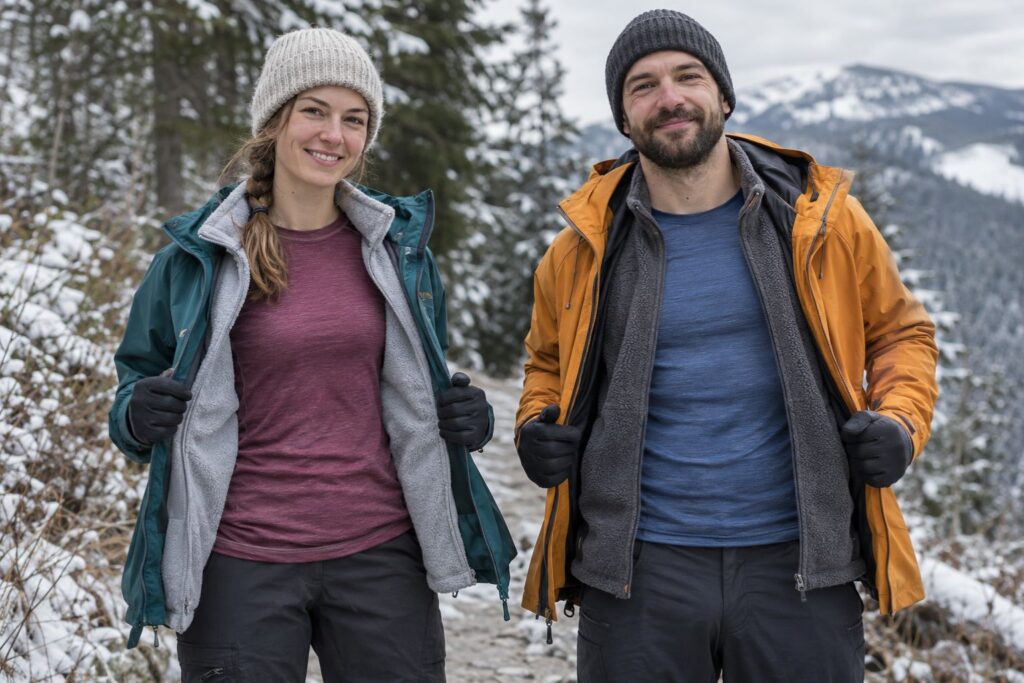
The mid-layer: comfortable warmth on the move
Over your base layer, you can wear a fleece or a lightweight insulated jacket. This layer helps retain the heat your body generates as you move.
A breathable fleece will often serve you well on the climb. But when you sit down for a snack, your body no longer generates heat at the same rate. That’s when a warmer jacket from your backpack comes in handy.
A down jacket provides plenty of warmth for its weight, but it needs to be kept dry. Synthetic insulation copes better with damp conditions. Keep your spare insulating layer packed somewhere dry and easy to reach, so you don’t have to empty your entire backpack to find it.
The outer layer: when the wind picks up or snow starts falling
While you’re walking through the woods, the weather can feel quite pleasant. Once you reach an open area, though, you’ll quickly notice how much difference the wind makes.
Your outer jacket should protect you from the wind and, depending on the conditions, rain and snow as well. A breathable softshell can be a good choice in drier weather. For wet snow or rain, a waterproof membrane jacket is useful. Water resistance varies between softshell models, so check the specifications when choosing one.
Make sure you can comfortably fit a fleece under your jacket and that the hood fits over your hat. Ventilation zips are useful for releasing heat on the climb. A thin waterproof jacket will protect you from the elements, but the layers underneath need to provide the insulation.
Which trousers and boots should you choose for winter hiking?
When choosing trousers, focus on freedom of movement. You’ll appreciate stretchy fabric that doesn’t restrict your stride when stepping through snow or walking uphill.
Hiking trousers with wind protection are often a good choice. In colder weather, add thermal leggings underneath; for wet conditions, pack waterproof overtrousers. Thick ski trousers can be too warm on a longer climb, while jeans take a long time to dry once wet.
Your boots have an even greater impact on comfort. For a snowy hike, choose sturdy hiking boots that provide enough warmth and protection against wet conditions. Try them on with the socks you’ll wear on your outing. Your toes need room to move and shouldn’t hit the front of the boots on the descent.
More socks don’t necessarily mean warmer feet. If two thick pairs make your boots too tight, they can restrict circulation and leave your feet feeling cold. A well-fitting pair of hiking socks, with a spare dry pair in your backpack, is a better option.
If you’re heading into deeper snow, gaiters can help, too. They cover the gap between your boots and trousers to keep snow from working its way inside.
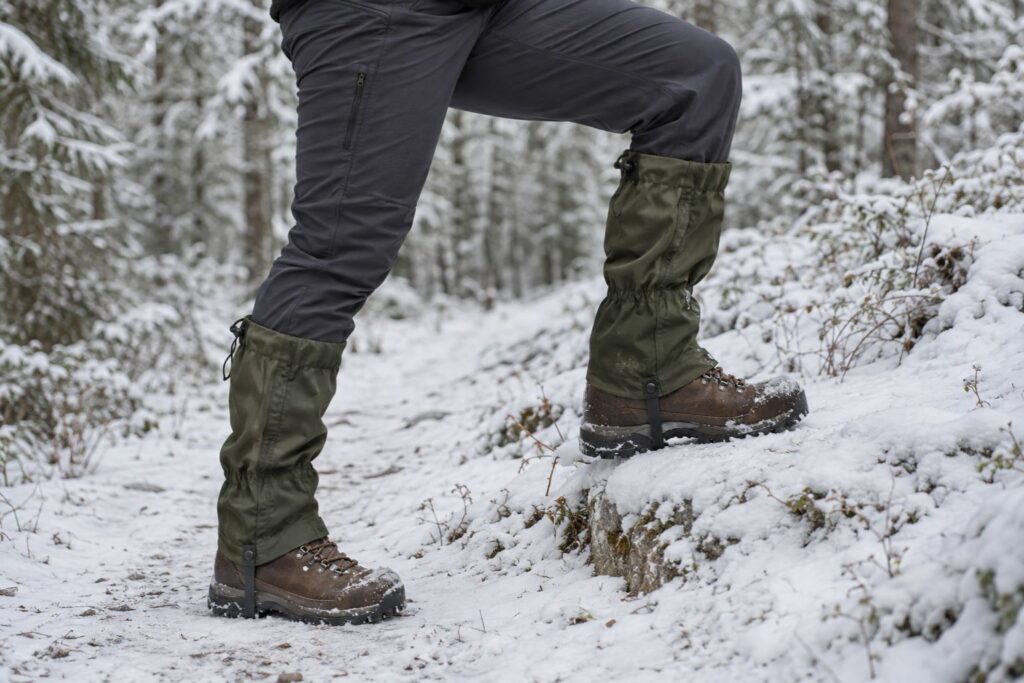
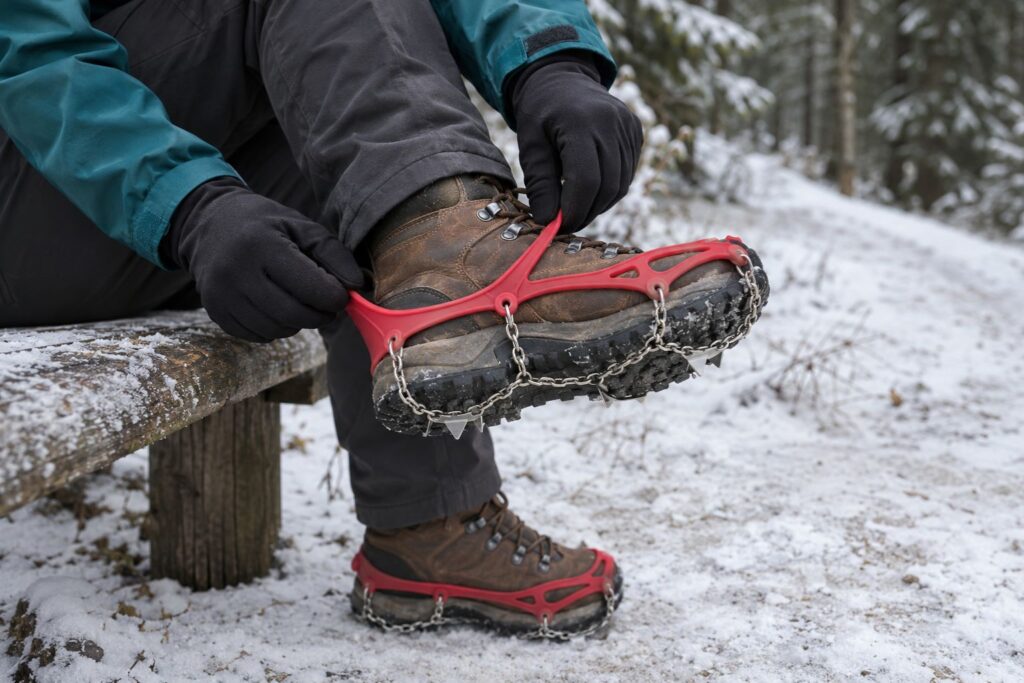
Microspikes or crampons: which are right for a winter trail?
Even comfortable hiking boots can lose their grip on an icy trail. That’s when microspikes, which slip over your footwear, come in handy. They help on compacted snow and ice on gentle terrain. Check the size and practise putting them on at home so there are no surprises on your hike.
Crampons are designed for more demanding, steeper frozen terrain, where microspikes are insufficient and a slip could lead to a serious fall. They require compatible boots and experience in using them.
Small essentials you’ll appreciate on your hike
Taking a snack out of your backpack, photographing the view or checking the map. Even these short stops can remind you how useful a good pair of gloves can be.
A practical approach is to combine thinner gloves for walking with warmer gloves that offer protection against wind and moisture. Pack a spare dry pair as well, especially if you’ll be handling snow frequently.
Your hat should cover your ears, while a neck gaiter will help protect your neck and the lower part of your face. Don’t forget sunglasses with UV protection and sunscreen. The sun can catch you out in winter, particularly when its rays reflect off the snow.
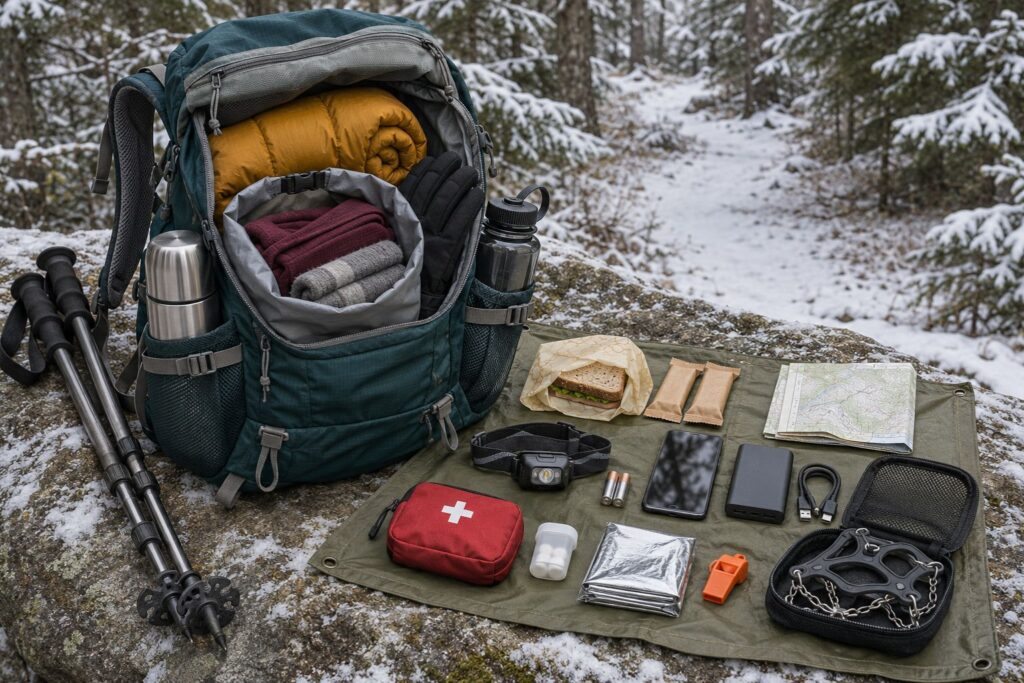
What should you pack for a winter hike?
For a shorter day hike, a backpack with a capacity of around 25–35 litres is often enough. More important than the number itself is having room for all your gear and any clothing you take off along the way.
Before you leave, check that you have:
- Dry clothing and insulation: a spare base-layer top, socks, gloves and a warmer jacket.
- Food and drinks: a snack, some extra food in case you’re delayed, water and a hot drink in a flask.
- A head torch: with spare batteries or a way to recharge it.
- Navigation and communication: an offline map with your route saved, a fully charged phone and a power bank.
- Emergency essentials: a small first-aid kit, personal medication, an emergency foil blanket or emergency bivvy bag, and a whistle.
- Route-specific equipment: suitable microspikes and, where needed, snowshoes and trekking poles with snow baskets.
You may feel less thirsty in winter, so drink regularly. Protect your water from freezing and your phone from the cold. Pack any clothing that needs to stay dry in a waterproof dry bag.
Ready for a winter hike?
Before setting off, check the weather once more, go through your backpack and choose a route you feel comfortable tackling. For your first winter outing, a shorter circular walk with a stop for hot tea is more than enough. Over time, you’ll discover which layers work for you and what’s worth keeping close at hand.
When your boots fit comfortably, your gloves aren’t wet and cold, and there’s a spare dry layer waiting in your backpack, a winter hike becomes much more enjoyable. You can make the most of your time together and the view you came to see.
And if you’re planning to swap hiking for a day on the slopes during your winter stay, take a look at our tips on how to choose clothing for skiing.
Zdieľajte tento blog


- Kubínska
- 20. November 2026
Dalšie články

How to Adjust Ski Bindings?
- Kubínska
- 4. November 2025
- 7 minutes reading

Beginner’s Manual: How to Choose the Right Ski and Pole Length
- Kubínska
- 3. December 2025
- 4 minutes reading

Strengthening Immunity During Winter – Simple Tips That Work
- Kubínska
- 30. December 2025
- 3 minutes reading
Together we make stories.
Together we are #kubinska



 © 2026 ORAVA SKIPARK, a.s.